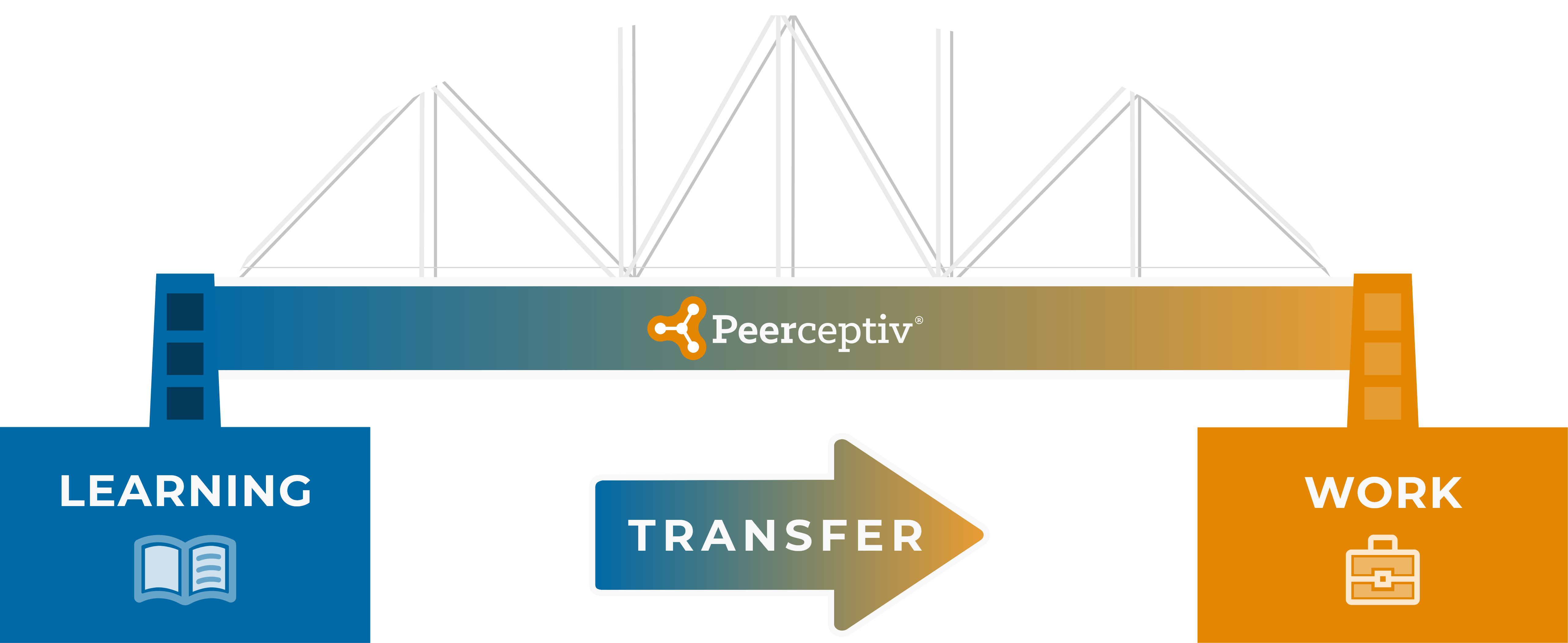
Transfer happens after training ends
That's exactly why it's so hard to see. The course wraps up, people go back to work, and whether they use what they learned depends on getting real chances to apply it, feedback on how it went, and practice over time.
Structured peer review builds that cycle into everyday work. People apply the skill, get feedback from several colleagues against clear criteria, and keep improving long after the course is over.
74%
of skills tracked across multiple assignments showed measurable growth at a Fortune 100 insurer using peer reviewSource: Peerceptiv customer data